Every spring, someone on the school staff gets handed the same job. Find entertainment that is actually fun, won’t draw a parent complaint, and won’t spend three weeks stuck in paperwork. A good magic show for schools can check all three boxes, but only if the performer already understands how schools work. Booking someone who has done this before cuts out most of the back and forth, because the questions you would normally have to ask are ones they have already answered for other principals.
Why Schools Look for an Approved Magician
Principals and event coordinators rarely worry about whether the tricks are good. They worry about what happens if something goes sideways. Is every student safe in a packed gym? Will the jokes stay appropriate for a room that includes five-year-olds and fifth graders? Will the show start and end on time so the lunch schedule doesn’t fall apart? And who is going to chase down the vendor forms?
A performer who has already worked in Chicago schools is much easier to say yes to. The school office has probably seen the paperwork before, and the performer knows what to hand over without being asked twice. The content is already tuned for classrooms, so you aren’t previewing material and hoping for the best. Timing is predictable too, because someone who has dealt with bell schedules, short setup windows and the teacher who needs the room back at 1:15 plans around them.
There is also a quieter benefit. When a coordinator has to defend a booking to a principal or a PTA board, “he has done this for other schools” is a far easier sentence than “he seemed nice on the phone.” If you want to see the kind of work that backs that up, look at a typical chicago magician show and how it adapts from one room to the next.
What CPS Approval Means for Your School Event
Approval is less mysterious than it sounds. In plain terms, a school wants to know who is coming into the building, that they are cleared to be around children, and that the school isn’t on the hook if something is damaged or someone gets hurt. Chicago Public Schools and individual principals can have their own rules, and those rules often differ from one building to the next.
Schools commonly ask for background check documentation, a certificate of insurance that names the school, vendor or W-9 forms, and sometimes references from other schools. John has worked with schools and libraries for years and handles this kind of paperwork as a normal part of booking.
Requirements change by school, so check with your own school office before you book. Ask what they need, how early they need it, and who signs off. Ten minutes on that call can save you a frantic email chain the week of the show.
What a Good Magic Show for Schools Looks Like
Most school shows run 30 to 45 minutes, which is about as long as a young audience stays with you before attention starts to drift. The material works from pre-K through middle school, though a single assembly across every age needs careful pacing. In a gym, the show depends on big visual moments the back row can actually see. In a cafeteria, sound is the real problem, so a good microphone matters more than props. A classroom show is closer and quieter, which suits sleight of hand.
The best shows are fun without turning into chaos. Kids should laugh, but they also need to watch closely, because magic only works when people are paying attention. A good performer builds that in by asking students to spot details or guess what comes next. With a large group, participation can’t mean twenty volunteers on stage. A few kids come up, and everyone else joins in through group counting, guessing and sound effects, so nobody sits there bored.
| Format | Best for | Typical length | Room |
|---|---|---|---|
| Assembly (whole school) | K-8 together, big kickoffs | 30 to 45 minutes | Gym or cafeteria with sound |
| Grade-level show | Two or three grades close in age | 30 to 40 minutes | Cafeteria, library or multipurpose room |
| Classroom show | One class, close-up magic, more interaction | 20 to 30 minutes | Regular classroom |
Assemblies are the easiest to schedule, but grade-level shows usually make for a better experience. The material fits the audience more closely, and the kids in the front aren’t six years younger than the kids in the back.
Matching the Show to Grade Levels
Pre-K through 2nd grade wants bright, silly and fast. Bits stay short, there is plenty of group response, and the surprise has to land quickly. Third through fifth graders like to play detective, so they enjoy bigger reveals, a bit of story and the chance to try to catch the trick.
Middle school is the tough crowd. Humor needs to be sharper, the baby talk has to go, and the best material feels more like a mind game than a kids’ show. Tell the performer the grade mix up front, because a room of eighth graders will punish a routine built for kindergarteners.
Magic Events for Schools Beyond the Assembly
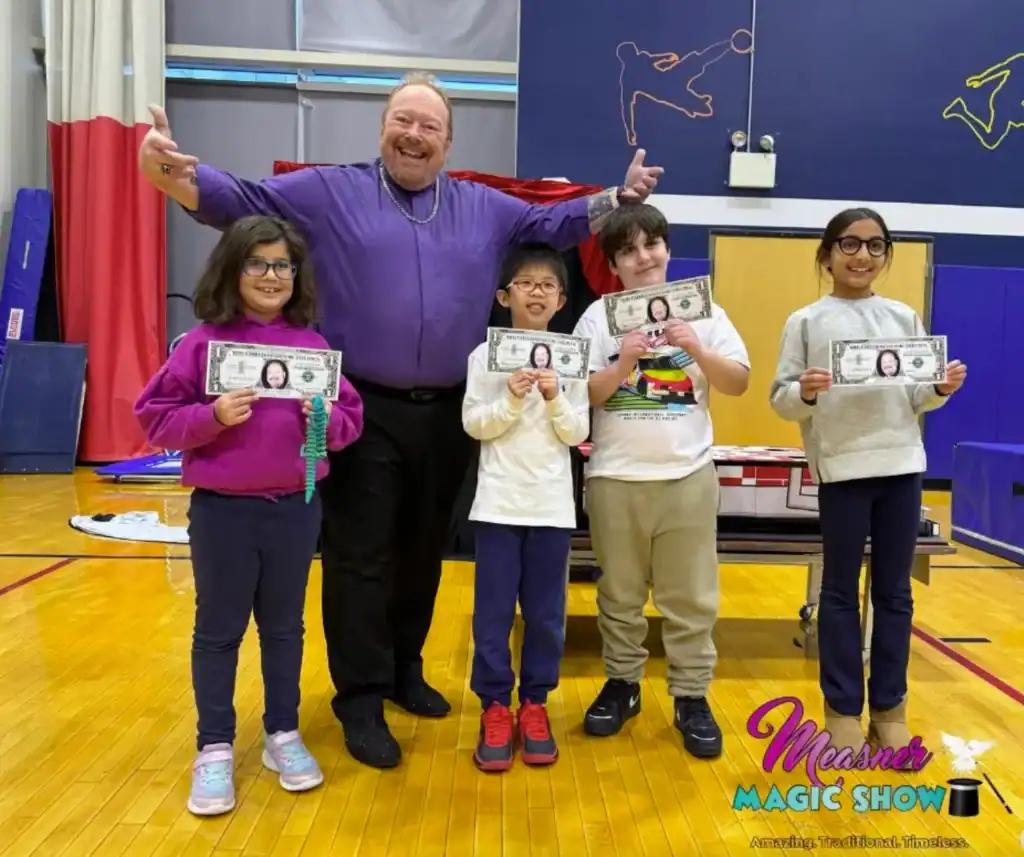
An assembly is the obvious booking, but it is not the only one. Reading kickoffs work well, especially if the performer ties tricks to books and storytelling. A reading-week theme such as “the magic inside a book” gives students something to talk about back in the classroom.
End-of-year celebrations are another natural fit, since everyone is restless and ready for something fun. Family nights, PTA events and fundraisers can use a show as the main draw, and it tends to pull in the parents who normally skip these evenings. At a spring festival or carnival, strolling magic between booths keeps lines entertained and gives younger kids a reason to wander over.
Staff and PTA holiday gatherings work too. If you are planning one for adults, Read Our Holiday Party Magic Tips before you pick a format.
Questions to Ask Before Booking a School Magician
Bring these to the first call. You want the answers in hand before you commit to a date.
- Is the performer cleared to work in Chicago schools?
- What age groups and group sizes can the show handle?
- How much space, power and setup time is needed?
- How long is the show, and can it be shortened to fit a class period?
- What happens if the schedule changes?
The first question is the one that saves you the most trouble. Ask for specifics instead of a simple yes, such as which documents they can send and how quickly. A performer who answers right away has clearly been through this before.
The schedule question matters more than people expect. Fire drills, late buses and testing days shift assemblies all the time. Ask how the performer handles a show pushed back an hour or cut short, because you want that answer before the day of the event.
Libraries and Community Programs Count Too
Everything above carries over to libraries and summer reading programs. The rooms are smaller, the audiences are often mixed ages and the paperwork is lighter, but the same rules apply. You still want a performer who keeps kids focused and keeps the show on schedule.
Booking John Measner for Your School
John has more than 35 years of experience and has performed for both schools and libraries. That history is the point. You are hiring someone who has already seen the odd gym layouts, the tight schedules and the principal who wants a copy of the paperwork by Friday.
Booking is simple. Call or contact us with your date, grade levels, room and expected headcount. John quotes each event individually, so there is no price list to compare. After that you will confirm the paperwork your school needs, the arrival and setup time, and the show length that fits your schedule. On the day, the goal is that your staff has almost nothing to manage.
Frequently Asked Questions
These are the questions school staff ask most often before they book. If yours isn’t here, ask it on the first call.
How far ahead should we book a school magic show?
Earlier is better, especially for spring and the weeks before winter break, when school calendars fill up fast. A month or more gives you room to sort out paperwork and pick a time that works around testing and lunch schedules. Shorter notice is sometimes possible, so it never hurts to ask.
Can one show work for kindergarteners and eighth graders at the same time?
It can, but it is a stretch. A mixed-age assembly has to balance bright, simple moments for the little kids with sharper humor for the older ones, and someone is always slightly underserved. If the schedule allows, two shorter shows split by grade level will land better than one long show for everyone.
Does the show need a stage, a microphone or special equipment from the school?
Tell the performer what the room has and what it doesn’t. A gym with a stage and a working sound system is ideal, but a cafeteria or classroom can work with a simpler setup. The key details to share are the room size, where students will sit, and whether there is power nearby.
Can the show be shortened to fit a class period?
Yes, the length can be adjusted to fit your schedule. Share your bell times and any hard stop when you reach out, and the show can be planned around them so it doesn’t run into lunch or dismissal.
How much does a school magic show cost?
There is no fixed price list, because each event is quoted based on the number of shows, the audience size and what the school needs. Send over your date, grade levels and location, and you will get a quote for your specific event.