Ask any children’s librarian about summer and they’ll tell you the calendar fills up fast. Storytimes, reading logs, craft tables, and a performer or two to pull in families who might otherwise stay home. Some of those performers visit once and disappear. A few get invited back year after year, and the reason has less to do with the tricks than people assume.
A familiar performer becomes part of the summer itself. Kids ask when he’s coming back, parents mention it at the desk, and the event stops feeling like a one-off.
A well-run library magic show can support participation, keep a room engaged, and give a reading program some continuity from one year to the next. It won’t do the reading for anyone, and it shouldn’t try to. What it can do is give kids a reason to walk through the doors and feel like the library is a fun place to be.
What Makes a Magic Show Work for a Library Summer Reading Program
Magic gives a room full of kids one thing to look at together. That sounds small, but a library crowd arrives with different reading levels, different friends, and different comfort zones. A shared activity levels things out, because nobody needs to have finished a book to gasp at a vanishing scarf.
It also connects to imagination in a natural way. A trick built around a missing book or a spell gone wrong gets kids thinking about story without anyone giving a lecture. A librarian can pick up that thread afterward at the shelves.
Age matters more than most booking forms admit. A summer reading crowd can run from toddlers on a parent’s lap to eleven-year-olds who would rather not be seen enjoying anything. A performer who plays everything at one level will lose one end of the room. The better ones build in moments for little kids to shout along and moments for older kids to try to catch the secret.
The show should sit beside the reading activities, not replace them. The best programs use the performance as the hook and keep the logs, sticker charts, and book displays right where families walk past on the way out.
Why Familiar Performers Can Build Stronger Library Programs
Variety sounds great on a planning spreadsheet. In practice, the performer who comes back brings two things a brand-new name can’t, and both show up quickly.
Children Remember More Than the Tricks
Kids rarely remember how a trick ended. They remember that the magician picked the girl in the green shirt, or that one gag made the whole room lose it. Those moments become stories at the dinner table, and the next summer they show up asking if the same person is coming back.
That kind of anticipation is hard to manufacture. A returning Chicago magician show gives kids something to count down to, and it gives shy children a head start. A kid who froze up last year knows what to expect this time and is far more likely to raise a hand.
Familiarity helps with parents too. They recognize the name on the flyer, they trust it, and they’re more likely to bring the younger sibling along. For a library trying to build attendance, that recognition is worth more than a clever poster.
Consistency Helps Librarians Plan Better Events
Anyone who has run a program room knows the small disasters. The projector screen is in the way, the carpet space fits forty kids and sixty showed up, or the performer needs a sound setup nobody mentioned.
A performer who has worked libraries before already knows how to handle that. They know how long the show can run before the squirming starts, how to manage a crowd that ranges from toddlers to tweens, and how to set up in a corner of a community room with a folding table and very little else.
Once you’ve watched someone deal with volunteers, noise, and the occasional child who yells out the secret, you stop worrying about those things. You can focus on the sign-in table and the book display instead. That matters when you’re running three programs in one week.
Experience with magic events for schools and libraries also means fewer surprises in the setup and the schedule. You can plan the room, the timing, and the age grouping with someone who has done it many times, and that is worth more than a flashy new act.
It’s also fair to ask a performer a few direct questions before booking. How do they handle a loud crowd, what space do they need, and do they change the show for mixed ages? Vague answers usually point to a vague show.
How Magic Supports Reading Program Engagement
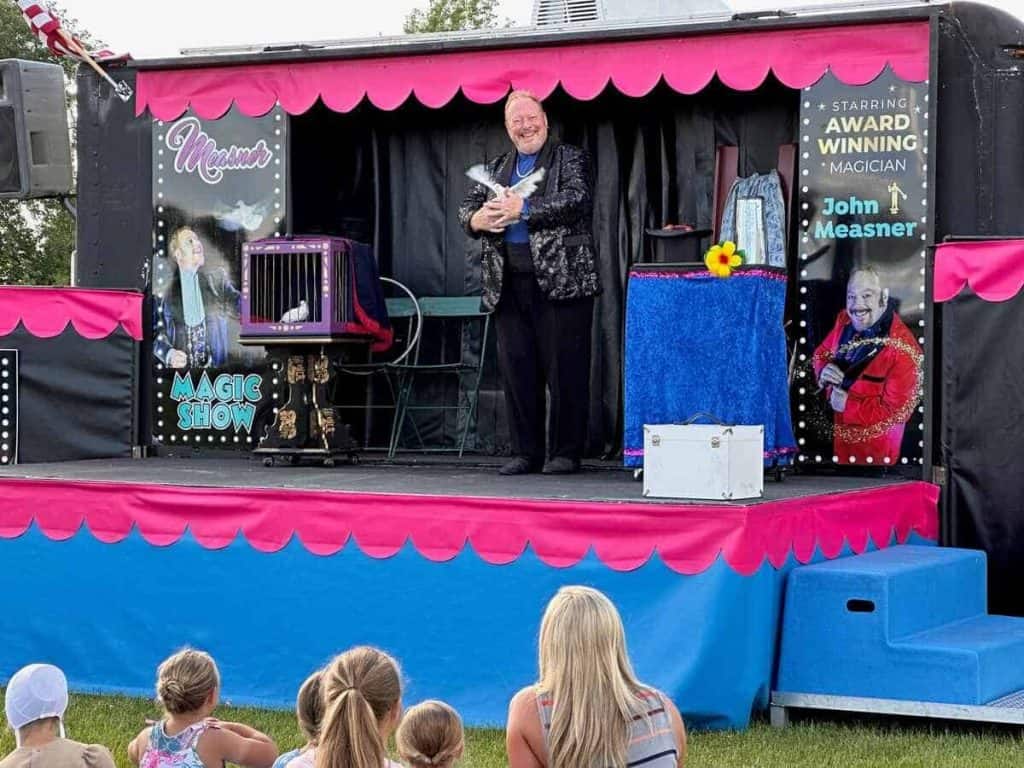
Magic and books share more than you’d think. Both depend on curiosity, both build toward a surprise, and both reward kids who pay attention. A good trick has a beginning, a problem, and a payoff, which makes it a story told with props.
Librarians can lean into that without turning it into a lesson. Introduce the show with a theme that matches the summer program, like mysteries, outer space, or animals. Ask kids what a magician and a librarian might have in common, and let them guess. Then point to the shelf of mystery novels once the applause dies down.
A magic show also gives hesitant families another reason to come. Some parents will skip a reading challenge kickoff but happily show up for a performance, and once they’re inside they see the sign-up sheet and the display tables. Plenty of them have already hired a birthday party magician for their own kids, so a free show at the library feels like a familiar treat.
None of this guarantees attendance, and it won’t make every child pick up a book afterward. Magic isn’t a shortcut to reading skills, and it’s better to be honest about that. What it does is add energy to a program, and energy is useful when you’re trying to keep families coming back all summer.
Building a Summer Program Children Want to Attend Again
The best summer programs have a rhythm. Something kicks it off, something keeps it going, and something sends kids out the door excited for next week. A library magic show fits well as the kickoff or the midpoint, when reading logs are half full and motivation starts to sag.
Try tying the performance to the rest of the calendar. Set up a mystery book display near the room, hand out a bookmark at the door, or run a prediction contest where kids guess what’s in the magician’s box and drop a slip at the desk. Small hooks like these cost almost nothing and give the show a purpose beyond filling an afternoon.
Here is one rough way to place a show across a summer. Every library’s schedule is different, so treat it as a starting point.
| Point in Summer | What the Show Does | Simple Tie-In |
| Opening week | Gets families through the door | Reading logs and sign-ups at the entrance |
| Midsummer | Revives interest when kids slow down | Bonus stamp for attending |
| Final week | Celebrates finishing the challenge | Prizes and a reading wrap-up after the show |
Some libraries skip all of that and book a single big finale, which works fine too. The point is that the show should connect to something instead of floating on its own.
Kids also need something to look forward to. A calendar with a magic show circled on it keeps a child talking about the library in the weeks between visits, and that kind of buzz is hard to get from a reading log alone.
John Measner’s school and library performances are built for this kind of planning. With more than 35 years of experience, he adjusts the show to the age range in the room, keeps participation moving, and works comfortably in a program room, a gym, or a corner of the stacks. Libraries that bring him back often find that kids start asking about him before the season even begins.
If you’re mapping out next summer’s schedule and want to talk dates, group sizes, or themes, reach out to us and John will help you work out what fits your space and your readers.